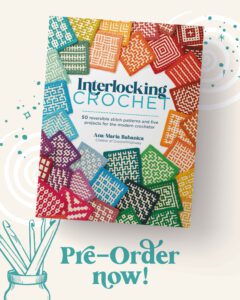
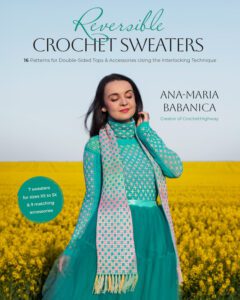
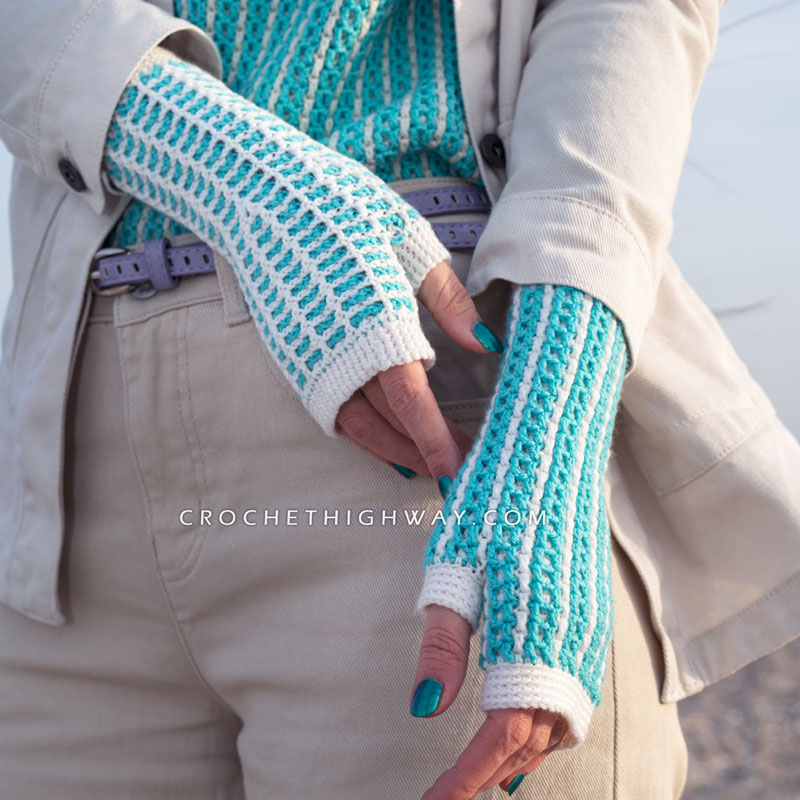
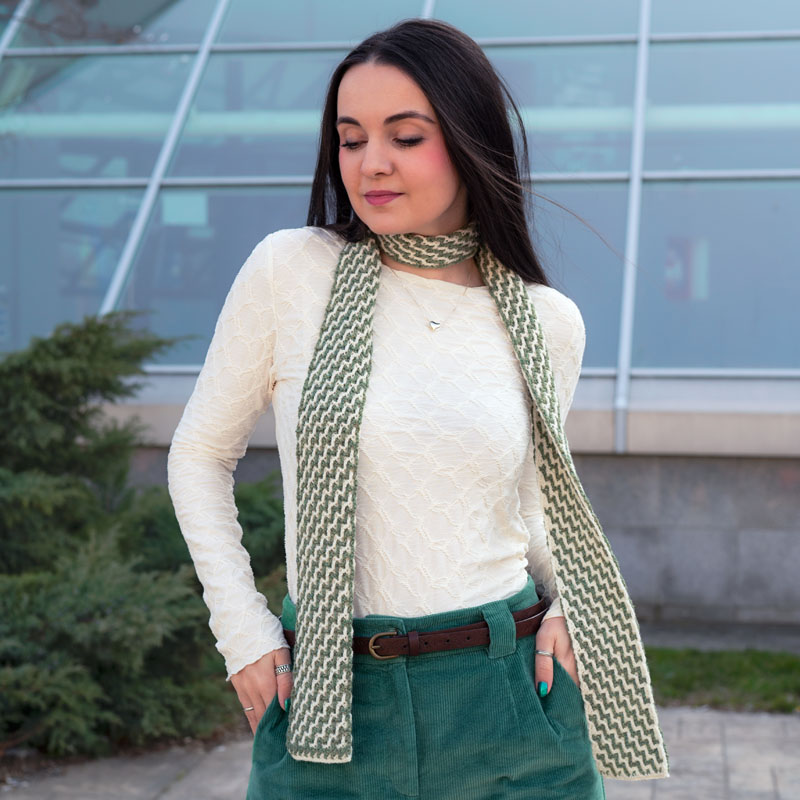
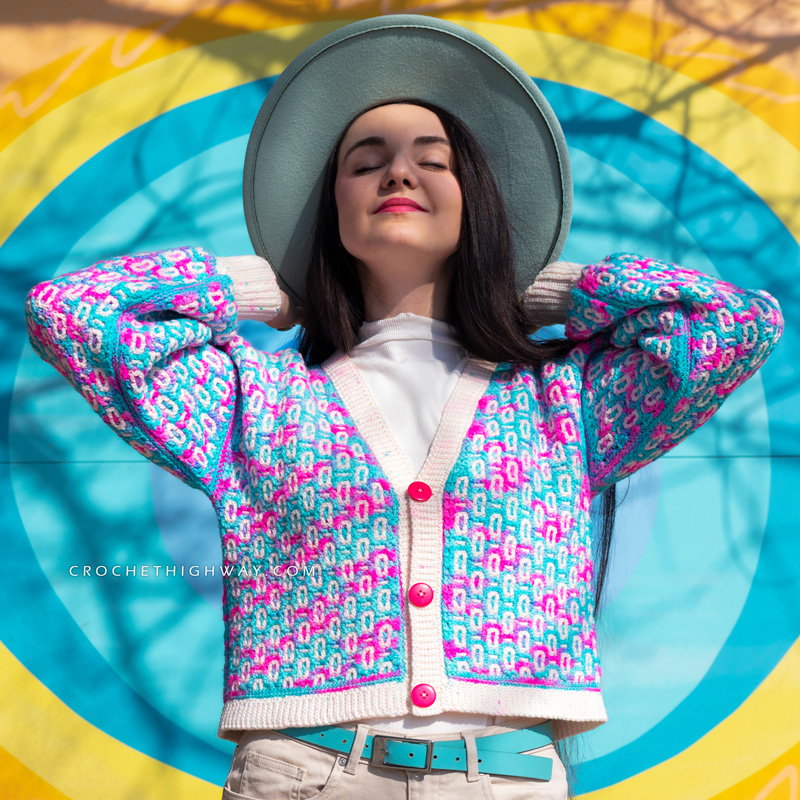
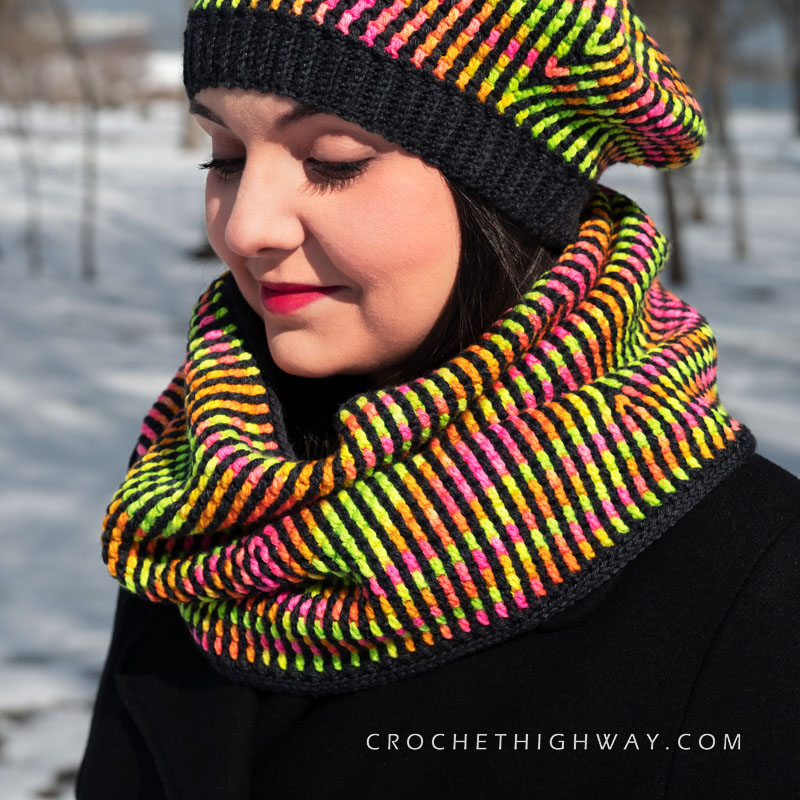
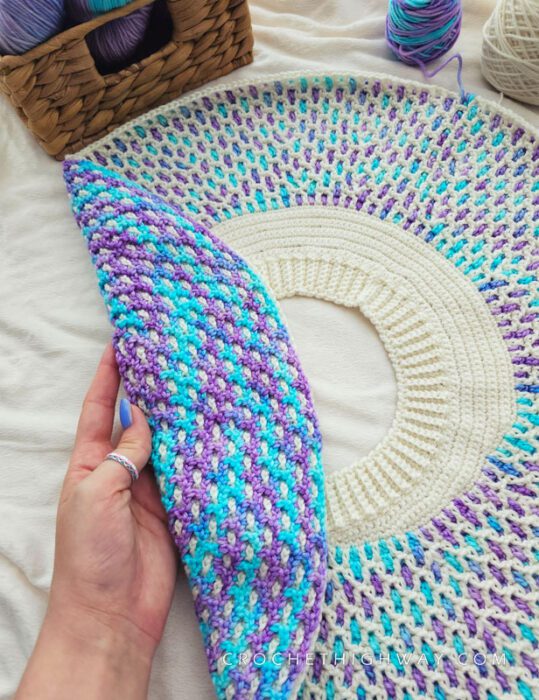
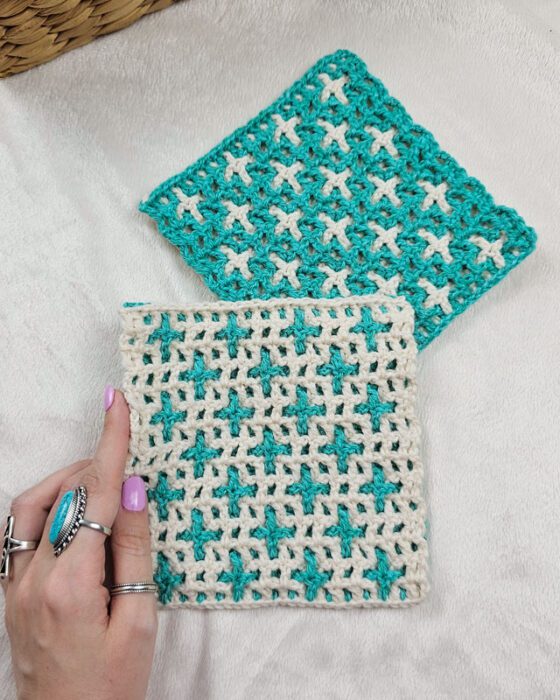
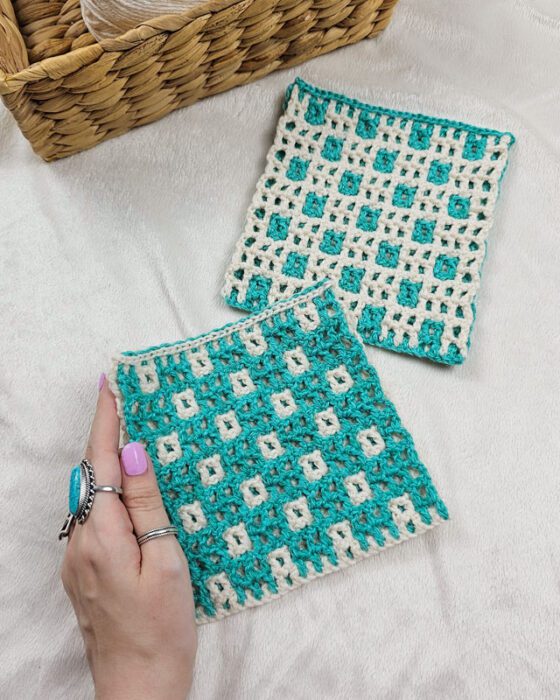
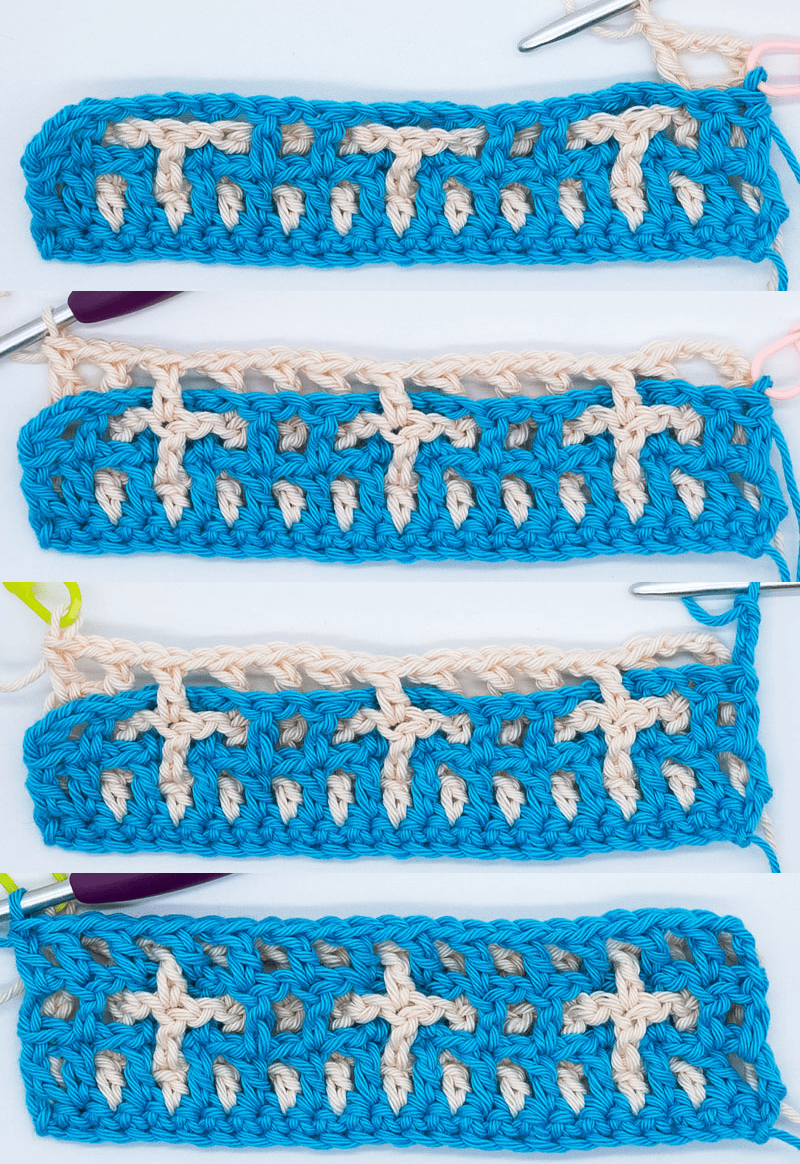
Here you can browse all my interlocking crochet (reversible) patterns. Tap on any image to check out its dedicated blog post, where you’ll find more photos and information about the pattern and where you can get your copy, as well as a list of yarn substitution ideas and the tester lookbook. You can start with my Let It Snow Cowl pattern which is free to view on the blog and comes with a step-by-step photo & video tutorial!
Here are the video tutorials I published on my YouTube Channel on the topic of interlocking crochet. I plan on making more and more video tutorials in the future, so be sure to subscribe to my YouTube channel!
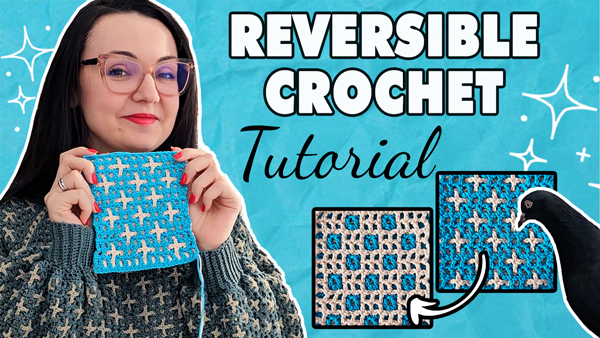
Interlocking Crochet Worked Flat Video Demonstration for the Tic Tac Toe Stitch
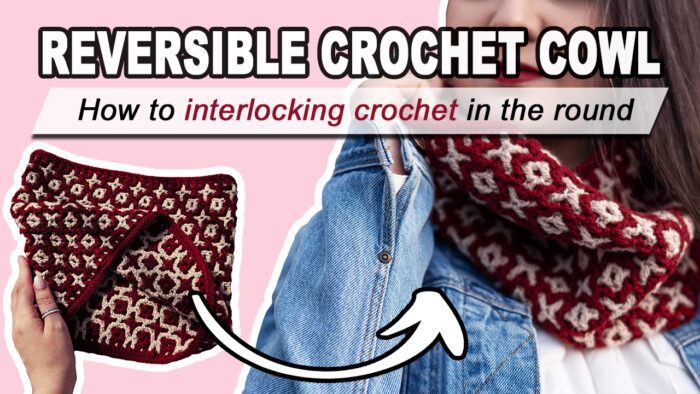
Interlocking Crochet Worked in the Round Video Demonstration for the Let It Snow Crochet Cowl
Sign up for a (paid) membership through my affiliate link above and get ready to master interlocking crochet in a comprehensive yet straight-to-the-point way! My step-by-step lessons are designed to walk you through everything you need to know in order to tackle any interlocking crochet pattern. By following along the videos, you’ll also learn 2 reversible stitch patterns using this technique. Plus, as a member of The Crochet Community, you also get a ton of other perks like workshops from other amazing designers & more!
FAQ: What is Interlocking Crochet?
Also known as interwoven crochet, intermeshing crochet, or double filet, this is a colorwork technique that involves working with only one color at a time. It stands out due to its simple execution and amazing results. Like building blocks coming together to construct an impressive structure, this crochet technique takes the simplest of stitches to create mind-blowing designs.
Unlike other colorwork techniques such as intarsia or tapestry, this method allows for the creation of intricate geometric designs without the hassle of carrying yarn, constantly switching colors, or managing floats on the back side of your work.
So, is interlocking crochet a type of mosaic crochet?
No, not at all! In mosaic crochet, you alternate between working your stitches from the current row into stitches from the previous row and from 2 rows below. In interlocking crochet, you always work your stitches from the current row into stitches from 2 rows below. This is the fundamental difference.
In terms of results, compared to mosaic crochet, interlocking crochet has the advantage that the fabric created is reversible. Flip the fabric over and it will either look the same as the front, or it will form an entirely different geometric design!
Why is it called “interlocking” crochet, though?
Because fundamentally, interlocking crochet consists of two interconnected layers of mesh fabric, each most commonly made with double crochets and chain spaces. One layer uses the main color (MC), which serves as the dominant yarn and usually forms the fabric’s base. The second layer, made with a contrast color (CC), interlocks with the main layer to produce the visual design. Together, these two layers create a reversible fabric that is visually appealing on both sides. By altering the positioning of the interlocking stitches, you can produce a variety of geometric patterns, each offering a surprising effect when viewed from the opposite side.
How can you crochet two layers at the same time?
The following technical information relates to my own method of working interlocking crochet that I developed for my garment and accessories patterns. It may differ from other methods particularly in terms of how to make the setup rows and what the fabric looks like along the vertical edges.
A fundamental principle in my patterns is that all rows will always have the exact same total stitch count. Of course, we’re not talking about the increases and decreases which may be used in some patterns for internal shaping (in the middle of a piece of fabric) or external shaping (along the edge of a piece of fabric).
Even though the total stitch count is the same, the DC/CH-sp count will differ on the two layers. The main color (MC) layer will start and end with 2 consecutive DCs with no chain space in between, while the contrast color (CC) layer will start and end with a single DC immediately neighbored by a CH-sp.
This means that the MC layer will always have one more DC and one fewer CH-sp when compared to the CC layer.
I choose to space the mesh stitches like this so that they overlap in a shifted position (each MC DC corresponds to a CC CH-sp and each CC DC corresponds to an MC CH-sp, allowing the interlocking of the stitches), while also maintaining the same stitch count on both layers, which is important for garment grading (all my garment patterns are size-inclusive).
***
The mesh layers are constructed simultaneously, row by row. Think of them like two parallel mesh layers that are physically overlapping. You start with a main color row, then switch to the contrast color for the next row, then back to the main color and so on. Every time you finish a row with one color, you’ll place that yarn on hold by securing it with a stitch marker or extending the last loop so that the work won’t unravel. Then, you’ll pick the next color back up on your hook and start working the next row with that color. You can look at it as one pass of each color, as if there were two active rows at once.
Each double crochet is always worked in the corresponding stitch of the same color (usually a DC) from 2 rows below. The chain spaces between the double crochets are usually skipped. In short, you always work main color into main color and contrast color into contrast color.
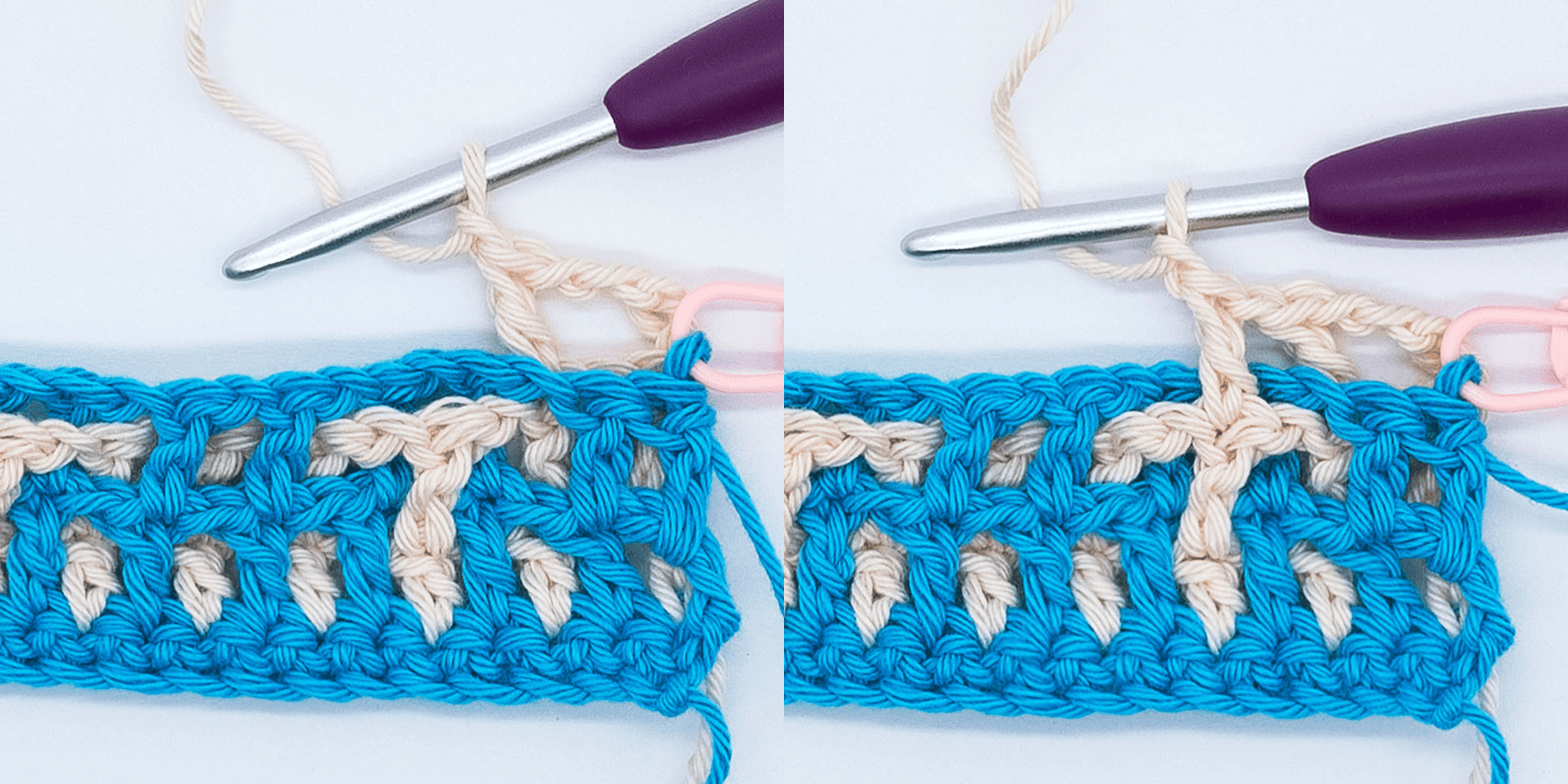
Sometimes, you’ll have to work your DC in front of this CH-sp, completely ignoring it:
Other times, you’ll have to insert your hook through (underneath) this CH-sp in order to reach the DC from 2 rows below:
Interlocking crochet may look intricate at first glance, but at its heart it’s an inviting, logical technique built from familiar stitches and thoughtful repetition. With a bit of curiosity and practice, those two overlapping layers quickly begin to make sense, and that’s where the magic happens. Whether you’re exploring a free tutorial, diving into a pattern, or working through a full garment, interlocking crochet opens the door to truly reversible pieces that feel as rewarding to make as they are to wear. Flip your work, see it transform, and enjoy the quiet joy of watching simple stitches come together into something unexpectedly beautiful!
Thirsty for more? Why not check out some of my recently published crochet patterns and tutorials: